ICE Attempts to Enter McDonald’s Without a Warrant and Security Blocks Access
A viral video shows a security guard preventing ICE agents from entering a McDonald’s without a judicial warrant in Minnesota, fueling debate
Posted on 12/01/2026 at 19:42






- McDonald’s Security Guard Blocks ICE Entry
- McDonald’s Demands a Judicial Warrant
- Sign Prohibits ICE Access
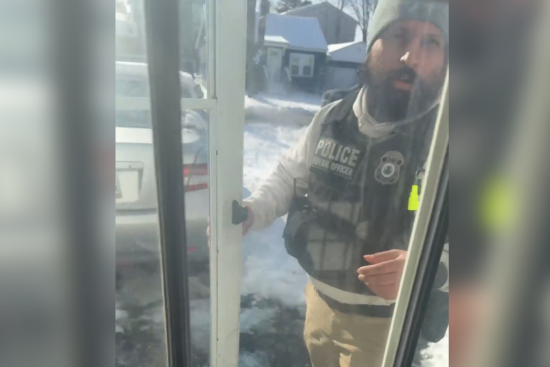
A video circulating on social media shows a security guard preventing agents from U.S. Immigration and Customs Enforcement (ICE) from entering a McDonald’s without a valid judicial warrant.
In the footage, the guard stands firm and tells the agents to leave if they do not have a warrant authorizing entry.
According to social media users, the agents attempted to force their way in, prompting the guard to lock the door and call the store owner before allowing any access.
ICE Denied Entry at McDonald’s and the Video Goes Viral
Security officer in a Minnesota McDonalds pushing back on federal ICE agents. pic.twitter.com/wyk2jun0JL
— Dweller (@One_Way_Home) January 9, 2026
In the same context, a McDonald’s in downtown Minneapolis has sparked online controversy over a sign posted at the entrance explicitly banning ICE agents from entering without a valid judicial warrant.
You may be interested in: Congress Debates Measures Against ICE After Minnesota Killing
The sign, widely shared on social media, states that the establishment is private property and that non-public areas are restricted without a warrant signed by a judge.
It also warns that anyone entering without such documentation would be trespassing and that legal action would be pursued.
Context of Rising Tensions in Minnesota Over ICE Actions
@Brinks agents work for #ICE, and a security guard stopped ICE from entering the employee area at a @McDonalds ‘s in #Minneapolis. pic.twitter.com/1a0jgVz6bW
— Meridional (@MeridionalLA) January 10, 2026
The controversy in Minneapolis unfolds amid a wave of outrage following the killing of Renee Nicole Good, a 37-year-old US citizen who was fatally shot by an ICE agent during an operation in the city.
The incident, which occurred on January 7, triggered strong reactions and protests.
Multiple sources report that Good was shot multiple times by an ICE agent during an immigration operation in a residential neighborhood, prompting demonstrations and demands for justice from the community.
Videos circulating on social media have fueled debate by partially contradicting the official version from federal authorities, who defended the use of force by claiming the agent acted in self-defense.
The shared footage shows tense moments between Renee Nicole Good and the agents before the shooting, though the exact circumstances remain under investigation by both federal and local authorities.
Protests over Good’s death have increased political pressure. Community groups and activists have demanded the removal of ICE agents from the city and justice for the victim’s family.
Demonstrations have taken place in Minneapolis and other U.S. cities, alongside calls to scrutinize federal immigration enforcement practices.
Meaning of the McDonald’s Sign
Outrageous.
Is @McDonalds OK with this brazen anti-law -enforcement bias? https://t.co/XUftxsdDlR
— Ted Cruz (@tedcruz) January 8, 2026
The McDonald’s sign in Minneapolis has become a symbol of local resistance to what many view as a growing and increasingly aggressive presence of federal agencies in the city.
The explicit ban on ICE agents entering without a judicial warrant reflects concerns over private property rights and civil liberties amid intensified immigration enforcement operations.
Public reaction on social media has been polarized. On one side, many support protecting private property and limiting federal agents’ access without a court order.
On the other, critics argue that the franchise’s stance is excessive or could lead to legal conflicts.
The public debate continues, shaped by broader discussions over immigration enforcement practices in the United States and the recent controversy in Minnesota.
What Comes Next?
Local and federal authorities continue to investigate both the death of Renee Good and the tensions that have emerged in Minneapolis.
The situation keeps attention focused on the interactions between federal agencies, local communities, and private businesses as controversial immigration policies remain under scrutiny—further amplifying the debate on how ICE was denied entry at McDonald’s.
 Related post