Trump Suggests Autism in the U.S. Is “Artificially Induced,” Reviving Debunked Theories
Trump suggests that autism in the US is artificially induced, reigniting unsupported theories and drawing criticism from experts.
Posted on 23/05/2025 at 22:01






- Trump on Autism: He Links It to Chemicals
- MAHA Commission Criticizes Food Industry
- No Conclusive Scientific Evidence
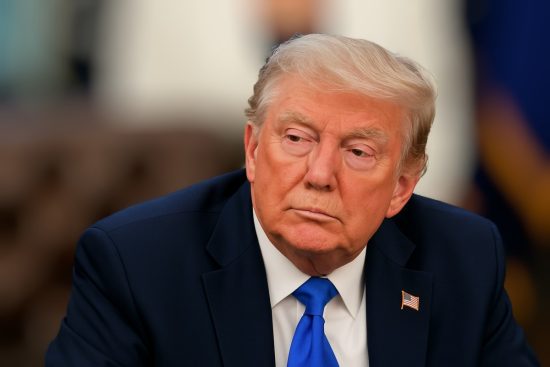
Donald Trump has reignited controversy surrounding autism in the United States with a statement that has sparked backlash from the scientific community.
During an event hosted by the Make America Healthy Again (MAHA) Commission, the U.S. president claimed that autism might have an artificial origin.
“It used to be 1 in 10,000, and now it’s 1 in 31 for autism. I think that’s terrible. It has to be something external, it has to be artificially induced, it has to be,” Trump stated.
The remarks were made during a public event promoted by his administration, where a report was presented on supposed factors affecting children’s health.
Trump and His Controversial Remarks on Autism
WATCH: President Trump said that autism must not occur naturally, citing figures inflating the spike in autism and suggesting the administration’s Make America Healthy Again (MAHA) Commission could provide answers. https://t.co/3e2r0diar9 pic.twitter.com/cmfs9kcxdo
— The Hill (@thehill) May 22, 2025
Trump’s statement contradicts official records, as the Centers for Disease Control and Prevention (CDC) have no data prior to the year 2000.
According to the latest CDC report, published in April, autism affects 1 in 31 eight-year-old children in the U.S., compared to the previous rate of 1 in 36.
In 2000, the rate was 1 in 150, indicating a steady rise over the years—though not as sharp as Trump claimed.
Health specialists and physicians warn that this increase is mainly due to improved diagnostic methods and greater public awareness.
Nonetheless, Trump revived debunked theories linking autism to vaccines, chemicals, or processed diets.
“We won’t let our public health system be taken over by the very industries that are supposed to regulate it. That’s why we demand answers—the people demand them—and that’s why we’re here,” he added.
YOU MAY ALSO LIKE: Trump Proposes 50% Tariff on the European Union Over Failed Negotiations
Standing beside him was Robert F. Kennedy Jr., Secretary of Health and known for his anti-vaccine stances, who has promoted similar ideas in the past.
The new MAHA Commission report blames declining child health on factors such as ultra-processed foods, environmental chemicals, excessive screen time, and overmedication.
Report Questions Vaccines and Additives Without Scientific Proof

The report also suggests scrutinizing vaccines, food dyes, additives, and pesticides more closely, although it provides no scientific evidence to support these claims.
The 69-page document compares the American diet to European standards and criticizes the high prevalence of artificial dyes and additives in U.S. food products.
Trump concluded by calling on food companies to reduce the use of these substances, though he did not outline any specific policy.
The scientific community responded cautiously, stressing that current research does not support a causal link between these factors and autism.
The president’s remarks add to a history of controversial and misleading claims.
Numerous peer-reviewed studies have shown there is no link between vaccines and autism, a consensus upheld by institutions such as the WHO and CDC.
Nevertheless, statements like Trump’s continue to resonate with anti-vaccine and conspiracy-leaning groups.
Medical professionals emphasize the importance of relying on scientific evidence—not on perceptions or distorted statistics.
What do you think? Should political leaders publicly comment on scientific matters without medical backing?
SOURCE: EFE
 Related post