New York Takes On ICE: What the New Law Proposes
New York has introduced a bill aimed at limiting ICE’s role and redefining how state police engage in immigration enforcement.
Posted on 03/02/2026 at 00:39






- New York limits ICE cooperation with new law
- Hochul challenges immigration policy
- State police barred from cooperation
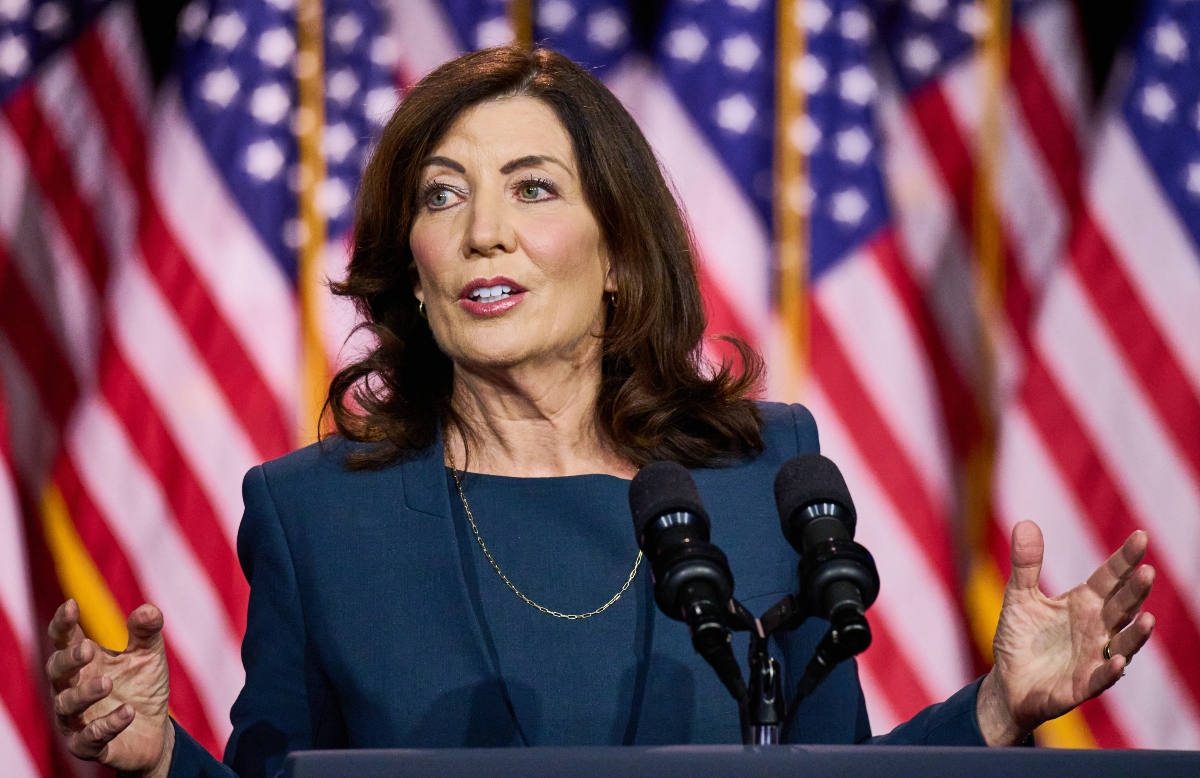
New York Governor Kathy Hochul introduced a bill this Friday that seeks to prohibit cooperation between ICE and state police.
The initiative is titled “Local Cops, Local Crimes Act” and aims to limit the role of state law enforcement in immigration policy.
According to Hochul, the goal is to prevent federal immigration agents from using local police to enforce the immigration agenda of President Donald Trump.
The proposal establishes that state police officers may not participate in federal immigration operations.
New York anti-ICE law seeks to break police cooperation
“No one—not an ICE agent, not a federal officer, not a president—is above the law.”
— Kathy Hochul, Governor of New York— THE NEW CHANO TIMES 🔺🇲🇽 (@JORDELAS1) January 27, 2026
The bill would also prevent ICE from using local detention centers to carry out large-scale operations within the state.
The governor said the law would allow state police to focus on their primary mission.
You may also like: Historic Change in New York for Private Security
“Keeping New Yorkers safe, instead of doing ICE’s job,” Hochul stated.
The proposal comes amid growing tensions between the federal government and Democratic-led state governments.
New York thus joins a nationwide debate over the role of local law enforcement in enforcing civil immigration laws.
What changes for state police?
New York Democrat Governor Kathy Hochul just announced her latest attack on law and order.
She’s pushing the so-called «Local Cops, Local Crimes Act» to block local police from working with ICE on deporting illegal immigrants.
Right now, several counties in New York, including… pic.twitter.com/1Wrw1S5VVm
— Old School Eddie (@Old_SchoolEddie) January 30, 2026
The legislation seeks to reinstate restrictions that were previously rolled back by the federal government on immigration enforcement.
Among them is the prohibition on enforcing civil immigration policies in sensitive locations.
These locations include schools, hospitals, and places of worship.
Hochul’s proposal restores those limits and adds new protections.
One provision would bar federal agents from entering private homes without a judicial warrant.
The governor said these measures reinforce basic rights in the face of federal operations.
Additionally, the law would provide New Yorkers with “a clear pathway” to sue federal officials.
This would apply in cases involving violations of individual rights.
Hochul was forceful in justifying the initiative.
“Over the past year, federal immigration agents have carried out acts of indescribable violence,” she said.
According to the governor, those actions were conducted under the pretext of public safety.
She also denounced the use of local police as tools to enforce civil immigration laws.
She stated that such abuses “will not be tolerated in New York.”
The context of federal–state tension
Governor Hochul Introduces «Local Cops, Local Crimes Act» To Stop ICE From Co-Opting Local Law Enforcement https://t.co/okiKuxOM9U pic.twitter.com/H15Pp9lRkK
— Long Island (@longisland) January 30, 2026
The proposal was welcomed by Legal Aid Society.
The organization—the oldest and largest of its kind in the country—described the initiative as a positive step.
According to Legal Aid Society, the law protects New York immigrants from federal overreach.
The group emphasized that the measures reinforce existing constitutional protections.
In particular, those requiring a judicial warrant for ICE to enter certain spaces.
The debate unfolds amid a climate of sharp political confrontation.
The deployment of federal agents ordered by Trump has triggered clashes with local governments.
This has been especially pronounced in Democratic-led cities and states.
The confrontation intensified after events in Minneapolis.
In January, two people were killed after being shot by federal agents.
The victims were protesting a federal operation in the city.
That episode became a flashpoint in the national debate.
Hochul’s initiative is introduced against this backdrop of escalating tension.
Now, the bill’s future will depend on the state legislative process as New York advances the New York ICE cooperation law.
 Related post