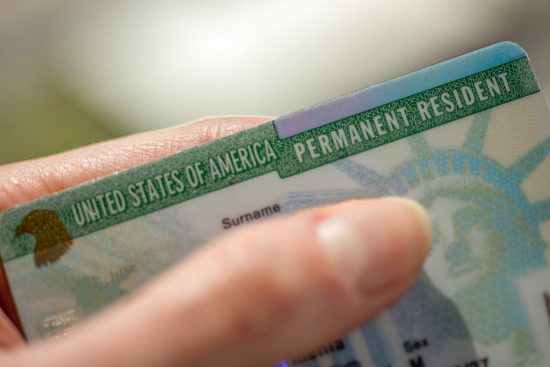
Trump Eliminates Official Loans for Green Card Holders
Loans issued by the SBA are changing as of March and are sparking controversy by excluding permanent residents from small businesses.
Posted on 07/02/2026 at 02:15







Publicado el 07/02/2026 a las 02:15
- SBA loans now exclude permanent residents
- New rules take effect in March
- Congress criticizes the decision
Legal permanent residents in the United States, commonly known as “green card” holders, will no longer be eligible for loans issued by the Small Business Administration (SBA) starting March 1.
The decision was announced in an official agency memorandum, which limits access to these loans exclusively to businesses that are 100% U.S.-owned and whose owners reside within the country.
The measure represents an additional tightening of the requirements to access the SBA’s most popular loans, particularly the 7(a) program, which is widely used for multiple business purposes.
Trump Eliminates SBA Loans: The Shift That Changes the Rules
The Small Business Administration is barring green card holders and other non-U.S. citizens from applying for loans from the agency’s main lending program.
— CBS News (@CBSNews) February 3, 2026
Until now, small businesses could qualify for SBA loans if at least 51% of ownership belonged to a U.S. citizen residing in the United States.
You may also like: “Trump Homes”: What Is the Housing Plan Proposed by Companies in the U.S.?
That criterion allowed permanent residents to participate as co-owners, as long as they did not hold majority control of the business.
According to CNN, the SBA had already significantly reduced that margin of foreign participation last December.
Who Is Left Out of Federal Financing?
Immigrant entrepreneurs with green cards will be left out of official U.S. loans.
https://t.co/F6WZFZZZoF— CNN en Español (@CNNEE) February 3, 2026
Since then, only companies with a maximum of 5% of their ownership in the hands of a foreign national, a green card holder, or a U.S. citizen living abroad were eligible for the program.
The new memorandum eliminates that possibility entirely.
As of March 1, any level of ownership by a legal permanent resident will disqualify a business from receiving the loan.
The restriction also applies to the 7(a) loan, one of the most sought-after programs for small businesses.
This program allows financing for a wide range of uses, with amounts of up to $5 million.
Loans Under Political Fire

The announcement prompted immediate reactions from Democratic lawmakers in Congress.
Senator Edward J. Markey and Representative Nydia Velázquez publicly condemned the policy change.
Both are senior members of the Small Business Committees in the Senate and the House of Representatives.
In a joint statement, the lawmakers accused the administration of President Donald Trump of excluding legal immigrants.
“Instead of supporting legal immigrants who work hard to start or expand a business, Trump’s SBA chose hate,” they stated.
They also said the new policy unfairly bars green card holders from accessing federal loans.
For the lawmakers, the decision contradicts the SBA’s historic mission of supporting small businesses.
Prior Warnings for Green Card Holders and a Decision Without Response
Senator Markey recalled that there had already been prior warnings about changes to citizenship requirements.
He said that last September he received information directly from SBA lenders.
According to Markey, those lenders reported problems stemming from citizenship verification processes.
Concerns intensified after the adjustments applied in December.
That same month, Democratic members of the Senate Small Business Committee sent a formal letter to the SBA.
In the document, they expressed concern over the new citizenship requirements.
They also highlighted a decline in the volume of loans being issued.
So far, according to the lawmakers, the SBA has not responded to that communication.
With the new restriction set to take effect on March 1, criticism remains ongoing.
The change marks a significant shift in access to federal financing for small businesses with permanent resident owners.
 Related post