Good News! Trump Proposes Stimulus Checks Funded by Tariff Revenue
Donald Trump’s new stimulus proposal would use US tariff revenues to fund direct payments to American families.







- Trump proposes tariff-funded stimulus checks
- A shift in US trade and economic policy
- Latino and middle-class families could benefit most
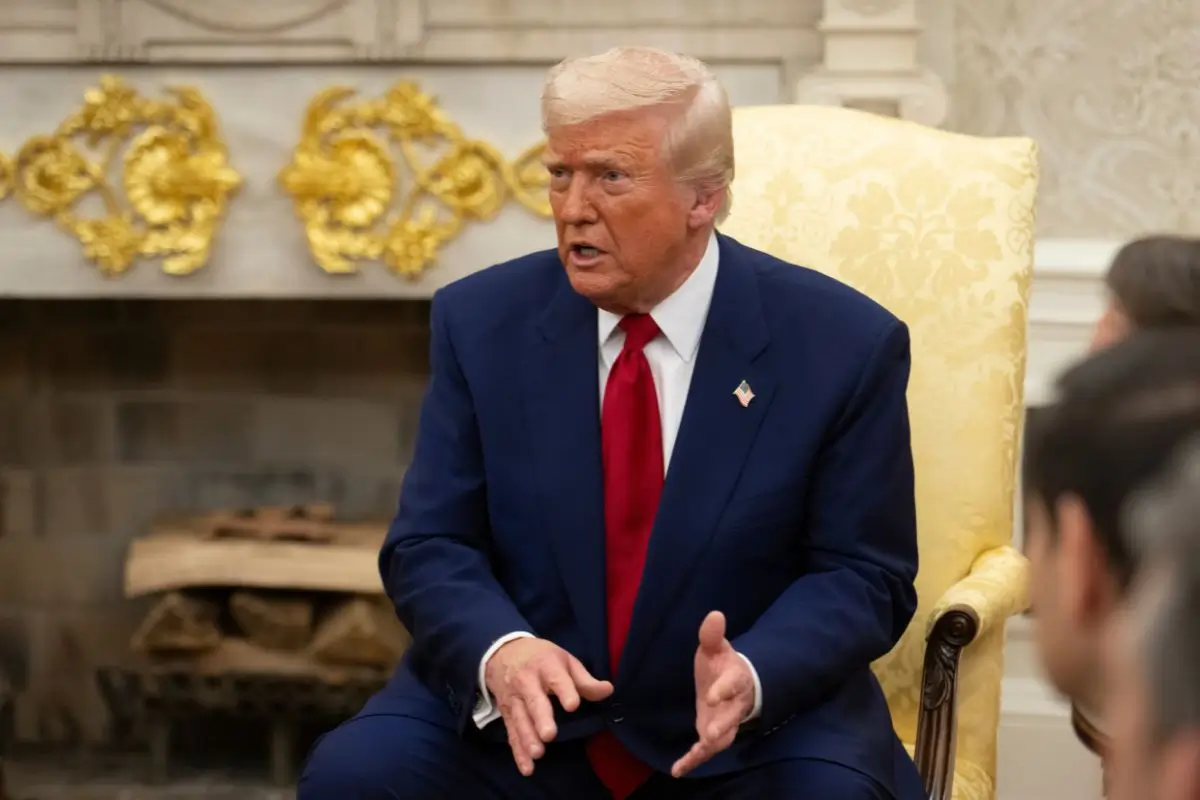
Former President Donald Trump announced that his administration is evaluating a plan to distribute new stimulus checks to American taxpayers using federal tariff revenues.
During remarks at the White House, Trump said the government would “probably distribute some of the tariff income to Americans within a short period of time.”
This marks one of the most ambitious moves in his economic agenda — combining trade policy with direct financial relief for citizens.
Trump’s New Stimulus Plan: Funded by Trade Revenue
Trump Says Government Will ‘Probably’ Distribute Some Tariff Revenue To Americanshttps://t.co/aJzF6zWrIc pic.twitter.com/oMEnkltOBr
— Forbes (@Forbes) October 21, 2025
According to the US Department of the Treasury, the government collected $31.3 billion in tariffs in September alone, totaling over $214.9 billion in 2025.
Until now, this money has flowed into the general Treasury fund. Under the new plan, a portion would be redirected to direct stimulus payments ranging from $1,000 to $2,000 per person.
Another portion, Trump said, would go toward reducing national debt, but the top priority is “helping American families.”
Although the plan has not yet been formalized into a bill, the White House is expected to release a detailed proposal in the coming weeks, potentially making it one of the most talked-about economic topics of the fall.
Potential Impact on the Latino Community
For millions of Latino families, Trump’s proposed stimulus checks could bring much-needed financial relief.
The Latino community has been among the most affected by rising inflation, housing costs, and increased prices for basic goods.
A tariff-funded stimulus program could help families catch up on overdue bills, invest in small businesses, and support local jobs, particularly in industries with high Latino representation such as construction, manufacturing, and services.
Economists suggest that such a program would have a double impact: providing short-term relief for households and stimulating local economies through higher consumer spending.
In Latino neighborhoods across the US, even modest stimulus checks could boost small family-owned businesses and community enterprises.
Political Debate Over Tariff Revenue
While Trump’s proposal has energized many supporters, it has also sparked debate in Washington.
Democrats and some economists question the sustainability of funding stimulus payments through tariff income, noting that tariffs often raise the cost of imported goods for consumers.
Trump, however, defends the plan as a “patriotic trade reform”, claiming it would reinvest international trade profits directly into the American workforce. “This is about putting America first and giving back to the people who make our country great,” he said.
Analysts suggest that this proposal could become a defining issue in the 2026 election cycle, particularly among middle-class Latino voters, who often prioritize tangible economic policies over partisan rhetoric.
What’s Next for Trump Tariff Stimulus Plan
If the proposal moves forward, the first payments could be distributed in early 2026.
Trump indicated that the goal is to create a sustainable economic model where tariff revenues serve as a permanent funding source for citizen stimulus payments.
If enacted, it would be the first time in US history that tariff income is directly used to fund stimulus checks for the public.
This measure could redefine American economic policy and further strengthen Trump’s appeal among working-class and Latino voters, a key demographic heading into the next election year.
 Related post