What Is the Next Target of Trump and Rubio: Cuba, Colombia… Mexico? What You Need to Know
Trump threats to Latin America raise tensions with Mexico, Colombia, and Cuba, as his statements revive debate over U.S. foreign policy.







- The Trump administration issued direct warnings against several Latin American countries following the operation in Venezuela.
- The threats raise regional tension and concern millions of migrants.
- Governments of Mexico, Colombia, and Cuba react as uncertainty grows over U.S. foreign policy.
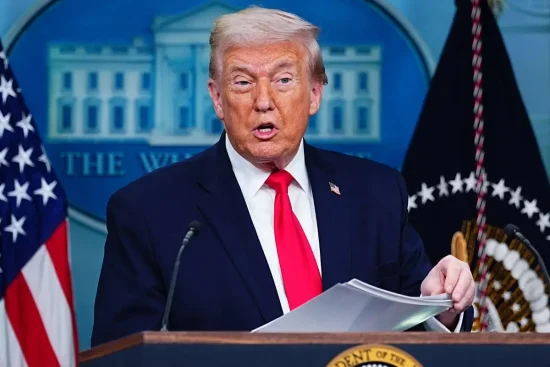
Recent statements by President Donald Trump have once again placed Latin America at the center of the international agenda.
Following a U.S. operation in Venezuela, the president made it clear that other countries in the region could face similar pressure.
His words, accompanied by messages from Secretary of State Marco Rubio, open a new chapter of diplomatic confrontation that is already prompting official responses and concern among Latino communities inside and outside the United States.
Trump Threats to Latin America and the Case of Colombia
The Trump threats to Latin America became explicit when the president spoke with reporters aboard Air Force One.
🇺🇸🇨🇺 | “Cuba is ready to fall,” President Donald Trump warned aboard Air Force One. pic.twitter.com/wEHKFfT6th
— Alerta Mundial (@AlertaMundoNews) January 5, 2026
When asked about a possible military operation against Colombia, he responded affirmatively and launched harsh accusations against the Colombian government. Trump claimed that the country is “very sick” and governed by a leader who produces cocaine to sell to the United States.
These statements triggered an immediate reaction from Colombian President Gustavo Petro, who rejected the accusations and said his name does not appear in any judicial files related to drug trafficking.
Petro described the comments as slander and emphasized that such language does not reflect appropriate relations between heads of state.
Attention!
Here, the governments representing the majority of the population of Latin America and the Caribbean express ourselves jointly: pic.twitter.com/2yTtw0IzcP— Gustavo Petro (@petrogustavo) January 4, 2026
Trump’s Foreign Policy and the Focus on Cuba
Beyond Colombia, Trump’s foreign policy appears to be strongly focused on Cuba.
Secretary of State Marco Rubio stated that the Cuban regime is going through a delicate moment and suggested its leaders should be concerned. Trump went even further by saying that Cuba “appears to be about to fall.”

According to analyses cited by British media, the U.S. strategy would not be limited to Venezuela.
Journalist David Blair, from The Telegraph, argues that the real objective could be Havana, considering that the Cuban government is a key pillar supporting Nicolás Maduro’s grip on power.
🇺🇸🇻🇪🇨🇺‼️ | BREAKING — The Telegraph publishes an explosive analysis: the real objective of Trump’s campaign in Venezuela would be Cuba.
According to the British newspaper, the White House is concentrating the largest military deployment in the Caribbean since 1989 not only to force the fall of… pic.twitter.com/lWWofY6yYo
— UHN Plus (@UHN_Plus) November 18, 2025
Mexico Within Trump’s Foreign Policy
Mexico also features prominently within Trump’s foreign policy agenda.
Over the weekend, the president stated that “something will have to be done regarding Mexico” and reiterated that he has offered U.S. military assistance to combat drug cartels.
The United States has carried out drone surveillance flights over Mexican territory in search of drug trafficking facilities. However, Mexican authorities have said these are authorized joint operations, ruling out unilateral actions.
Mexico’s Response to Pressure From the U.S.
Mexican President Claudia Sheinbaum clearly rejected any U.S. intervention in Mexico. According to EFE, she said that a military action “would be of no use” in reducing violence or drug trafficking.
“First, it is an issue of sovereignty, of defending national sovereignty. But second, it would be of no use,” she said during her morning press conference, referring to repeated offers by Trump to send troops to fight criminal groups.
🚨 SHEINBAUM ON MADURO’S CAPTURE: “One thing is to disagree with the Chavista regime and another very different thing is for a foreign power to use force to take a president.” She emphasized that this cannot be supported due to national sovereignty. #México… pic.twitter.com/LCGTpwGOyX
— NewsMx Tv Medio de Comunicación (@NewsMx_Tv) January 6, 2026
She defended national sovereignty and said the bilateral relationship must be based on cooperation, not subordination.
“In Calderón’s time, DEA agents went on operations. They were with federal forces, and what did that accomplish?” she asked, pointing to high homicide rates and resulting violence.
Sheinbaum stressed that Mexico will maintain security coordination, but always under principles of mutual respect.
You may also like: United States Could Repeat What It Did in Venezuela Against Any Country That “Poses a Threat,” According to Ambassador Waltz
What Impact Do Trump’s Threats Have on Latinos in the U.S.?
For the Latino community in the United States, the Trump threats to Latin America are not a distant issue. Millions of people have family and economic ties to Mexico, Colombia, and Cuba. Each statement increases concern about possible political, economic, or migratory crises.
Additionally, this type of rhetoric creates uncertainty among binational families who fear changes in immigration policy, new diplomatic tensions, or direct consequences in their countries of origin.
¿Tú que opinas sobre la postura que ha tomado el gobierno de Trump?
What Do Analysts Say
“The final objective may not be Caracas, but Havana,” said David Blair of The Telegraph while analyzing Washington’s regional strategy.
“It’s not about changing Claudia Sheinbaum, but about showing that he can pursue fentanyl laboratories,” said John Feeley.
What Comes Next
Although there are no official announcements of new operations, Washington’s tone keeps the region on alert.
The coming weeks will be key to determining whether these threats translate into concrete actions or remain part of a pressure strategy within Trump’s foreign policy.
 Related post