All 2026 World Cup stadiums: locations, capacities and fun facts
Discover the venues of the 2026 World Cup: capacities, locations, and fun facts about the stadiums in the US, Mexico and Canada.
Posted on 04/12/2025 at 18:15






The 2026 World Cup will mark a historic chapter for soccer as it is held for the first time in three countries: the United States, Mexico and Canada. With 48 national teams, more matches than ever before and world-class venues, this tournament is expected to become the most spectacular to date. The 16 selected stadiums combine tradition, modernity, technological infrastructure and some of the most remarkable sporting environments on the planet.
From the legendary Estadio Azteca—which has hosted two historic finals—to ultra-modern venues like SoFi Stadium, each site has a story to tell. Some stand out for their revolutionary architectural design; others for their capacity to create deafening atmospheres, attendance records or their history of hosting major sporting and entertainment events.
If you want an in-depth look at where the biggest World Cup in history will be played, here is the complete guide.
2026 WORLD CUP STADIUMS
MetLife Stadium – East Rutherford, USA

- Capacity: 82,500
- Location: East Rutherford, New Jersey
- Built: 2010
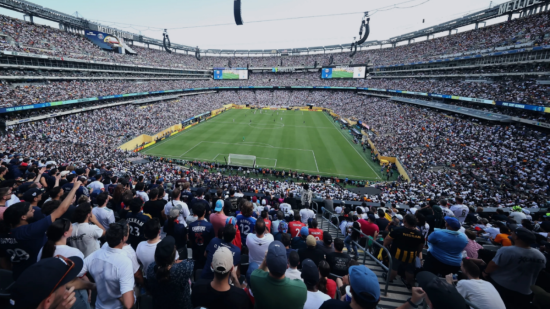
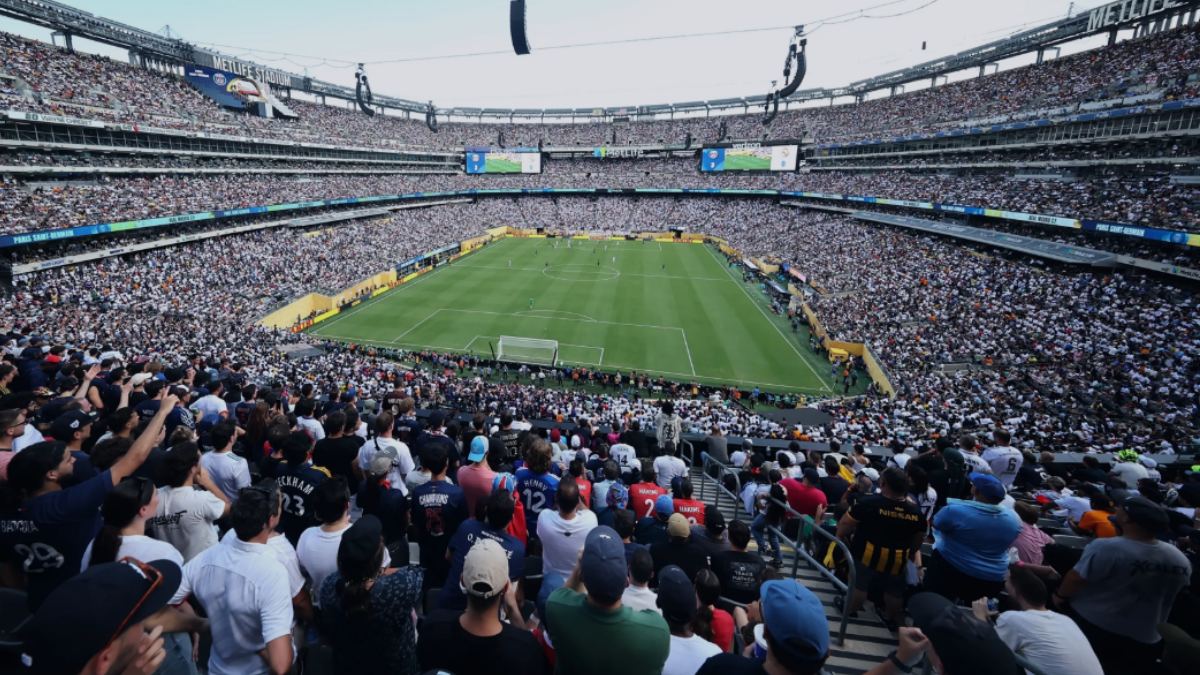
MetLife Stadium is one of the most expensive venues ever built, costing more than $1.6 billion. It is home to two NFL teams (the Giants and the Jets), an uncommon arrangement in U.S. professional sports. Its central video board is one of the largest in the country, and its design allows for a complete switch of home-team branding in under 24 hours.
AT&T Stadium – Arlington, USA

- Capacity: 80,000
- Location: Arlington, Texas
- Built: 2009
Its central hanging screen was, for years, the largest in the world, stretching nearly end-to-end across the field. Known as “Jerry’s World” after Cowboys owner Jerry Jones, it can expand to more than 100,000 spectators, making it one of the largest indoor stadiums on the planet.
Mercedes-Benz Stadium – Atlanta, USA

- Capacity: 71,000
- Location: Atlanta, Georgia
- Built: 2017
Its eight-panel retractable roof is inspired by a falcon’s eye and is considered an engineering masterpiece. It was the first stadium in the world to earn LEED Platinum certification for sustainability, featuring rainwater collection systems and highly efficient energy use.
NRG Stadium – Houston, USA

- Capacity: 72,200
- Location: Houston, Texas
- Built: 2002
It was the first NFL stadium with a retractable roof, setting a trend for major sporting venues. Its flexibility allows it to host everything from Super Bowls to massive rodeos, including one of the largest rodeo festivals in the world, with the ability to transform its field in hours.
SoFi Stadium – Inglewood (Los Angeles), USA

- Capacity: 70,000
- Location: Inglewood, California
- Built: 2020
One of the most expensive stadiums ever built, exceeding $5 billion. Its circular “Infinity Screen” is the largest 4K video board in the world, suspended above the field with dual-sided visibility. Its sunken design helps mitigate airplane noise due to its proximity to LAX.
Levi’s Stadium – Santa Clara, USA

- Capacity: 68,500
- Location: Santa Clara, California
- Built: 2014
One of the most environmentally friendly stadiums in the U.S., with solar panels that power much of the facility. It features a living roof—a green garden—that enhances energy efficiency and thermal regulation. Major European soccer clubs have played summer preseason classics here.
Arrowhead Stadium – Kansas City, USA

- Capacity: 76,400
- Location: Kansas City, Missouri
- Built: 1972
Holds the world record for the loudest stadium, reaching 142.2 decibels—comparable to a jet takeoff. Its design amplifies crowd noise, creating one of the most intense atmospheres in American sports.
Gillette Stadium – Foxborough, USA

- Capacity: 65,800
- Location: Foxborough, Massachusetts
- Built: 2002
Home of the New England Patriots, its interior museum—The Hall—is among the most interactive in any stadium worldwide. The venue sits within Patriot Place, a vast entertainment and shopping complex that makes it a tourist destination beyond game days.
Hard Rock Stadium – Miami, USA

- Capacity: 65,300
- Location: Miami Gardens, Florida
- Built: 1987 (renovated 2016)
After a $500 million renovation, the stadium added a unique roof designed to shade 90% of seats. It has hosted Super Bowls, Formula 1 races and major concerts. Its modular design allows it to adapt to multiple sports without sacrificing visibility or capacity.
Lumen Field – Seattle, USA

- Capacity: 68,740
- Location: Seattle, Washington
- Built: 2002
Famous for the “Seattle Sound” phenomenon, where fans generate vibrations strong enough to be detected by seismic instruments at MLS and NFL games. Its acoustics amplify crowd noise, making it one of the best atmospheres in the country.
Lincoln Financial Field – Philadelphia, USA

- Capacity: 67,500
- Location: Philadelphia, Pennsylvania
- Built: 2003
The first NFL stadium to implement a full renewable energy program, with thousands of embedded solar panels. Its hybrid turf merges natural and synthetic materials, offering firmness without losing the natural feel for players.
BC Place – Vancouver, Canada

- Capacity: 54,500
- Location: Vancouver, British Columbia
- Built: 1983 (renovated 2011)
Its original inflatable roof was replaced with a one-of-a-kind retractable cover, one of the largest in the world. It also hosted the opening ceremony of the 2010 Winter Olympics, showcasing its versatility for global sporting events.
BMO Field – Toronto, Canada

- Capacity: 45,736
- Location: Toronto, Ontario
- Built: 2007
Originally a smaller stadium, it has been expanded multiple times to meet international standards. For the World Cup, temporary expansions will significantly increase its capacity. It is home to Toronto FC, one of MLS’s most successful clubs of the last decade.
Estadio Azteca – Mexico City, Mexico

- Capacity: 83,264
- Location: Mexico City
- Built: 1966
The only stadium in the world to host two World Cup finals (1970 and 1986), and it will receive its third in 2026. It was the stage for Maradona’s “Goal of the Century” and the “Hand of God.” Its altitude, history and atmosphere make it one of the most legendary venues in world football.
Estadio Akron – Guadalajara, Mexico

- Capacity: 48,071
- Location: Zapopan, Jalisco
- Built: 2010
Designed to resemble a volcano, its futuristic architecture features a vast green plateau covering part of the structure. Its acoustics retain crowd noise, creating a compact and intense environment. It is one of Mexico’s most modern stadiums.
Estadio BBVA – Monterrey, Mexico

- Capacity: 53,500
- Location: Monterrey, Nuevo León
- Built: 2015
Known as “El Gigante de Acero,” its steel structure reflects Monterrey’s industrial heritage. From the stands, spectators enjoy an iconic view of Cerro de la Silla, one of the most spectacular panoramas in world football. Its ventilation technology keeps the interior cool despite the hot climate.
You may also like: Cristiano Ronaldo Receives FIFA Suspension — Will He Miss the World Cup?
The 2026 World Cup will bring together some of the most impressive stadiums on the planet, each with its own story, innovations and character. From architectural wonders to legendary historic venues, these 16 stadiums will be the backdrop of an unforgettable tournament. If you love soccer or plan to attend a match, this list is the perfect guide to thoroughly explore every World Cup stadium.
 Related post