Ebola Outbreak Worsens in Central Africa: Death Toll Rises and Sparks International Alert







Posted on 05/27/26 at 15:47
- Ebola Outbreak Worsens
- Cases Exceed 900
- International Health Emergency
The Ebola outbreak in Central Africa continues to expand as suspected deaths rise in the Democratic Republic of Congo and new infections are confirmed in Uganda.
International health authorities warned that the number of deaths linked to the virus could exceed 220, amid difficulties in detecting cases in time.
In Uganda, confirmed infections rose to seven after new patients connected to the outbreak that originated in Congolese territory were identified.
The situation has raised regional alarms because of cross-border movement of people and the initial delay in identifying the outbreak.
The Spread of the Ebola Virus Crosses Borders
The main focus remains in Ituri province, in eastern Congo, where suspected cases exceed 900 and confirmed cases have already surpassed one hundred.
The infections detected in Uganda are directly linked to people who traveled from Congo or had contact with infected patients.
YOU MAY BE INTERESTED IN: FDA Issues Urgent Alert Over Popular Contaminated Matcha Drinks
One of the first cases in Uganda was a Congolese man who died after being hospitalized in Kampala, before it was confirmed that he had Ebola.
Later, drivers, health workers, and hospital staff who had contact with the patient tested positive for the virus.
Violence and Distrust Complicate the Response
The health response has been obstructed by fear and distrust in communities affected by years of armed conflict.
In eastern Congo, attacks were reported on medical centers treating Ebola patients, forcing patients to be evacuated amid gunfire.
Humanitarian organizations reported that volunteers died after contracting the virus while handling bodies during community missions.
These events could alter the outbreak timeline and confirm that transmission began before its official declaration.
What Ebola Is, What Are Its Symptoms and How It Spreads
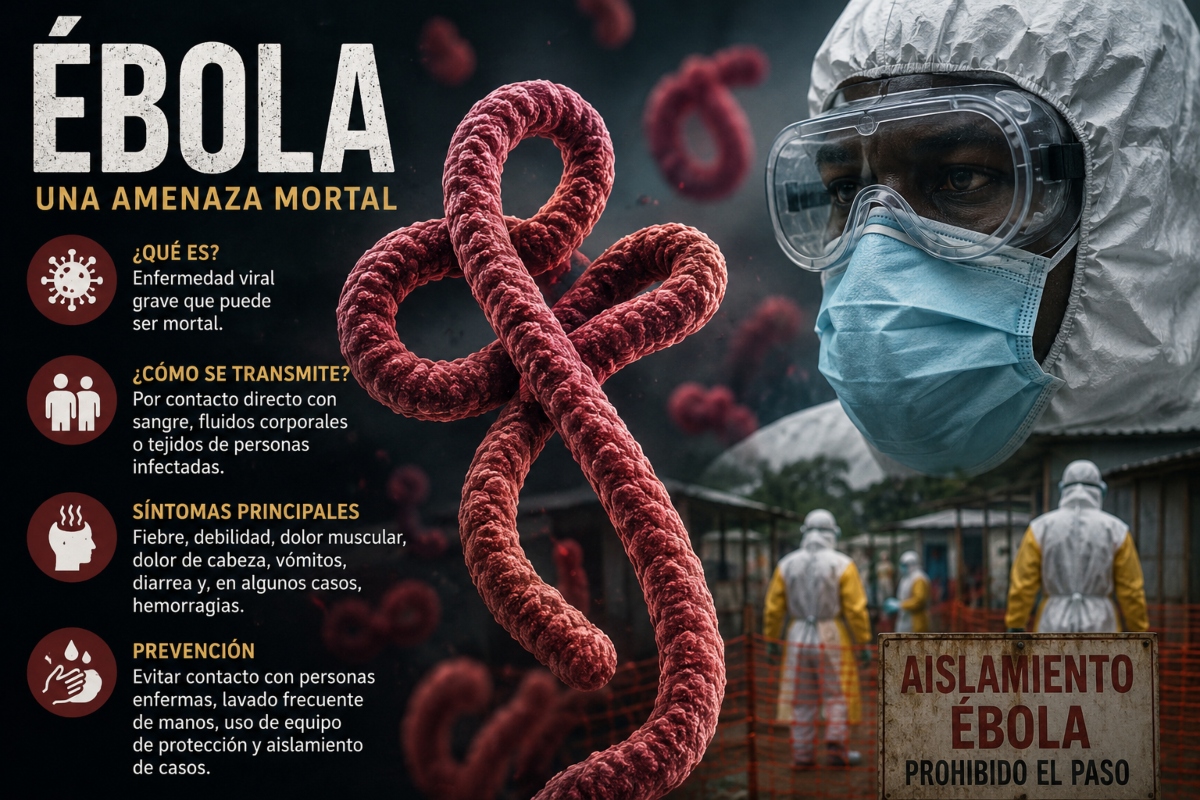
Ebola is a serious viral disease that causes hemorrhagic fever and can be fatal if not detected and treated promptly.
It spreads through direct contact with blood, bodily fluids, or tissues of infected people, as well as through handling contaminated bodies.
Initial symptoms include high fever, severe weakness, muscle and headache pain, followed in some cases by vomiting, diarrhea, and bleeding.
Prevention is based on early isolation of cases, use of protective equipment, strict infection control, and contact tracing.
International Emergency Without Approved Vaccine
The World Health Organization declared the outbreak a public health emergency of international concern because of the risk of further spread.
The responsible virus belongs to the Bundibugyo type, a variant for which there is currently no approved vaccine or treatment.
Researchers are working on the development of possible vaccines that could begin clinical trials in the coming months.
Meanwhile, health authorities are intensifying epidemiological surveillance and contact tracing to stop the spread.
The combination of cross-border infections, local violence, and lack of approved treatments is keeping the region on maximum health alert, CBS News reported.