Trump Revives Public Charge Rule That Could Threaten Permanent Residency for Thousands of Immigrants







Posted on 07/20/26 at 19:02
- Trump revives public charge rule.
- USCIS tightens residency evaluations.
- Green Card applicants face new requirements.
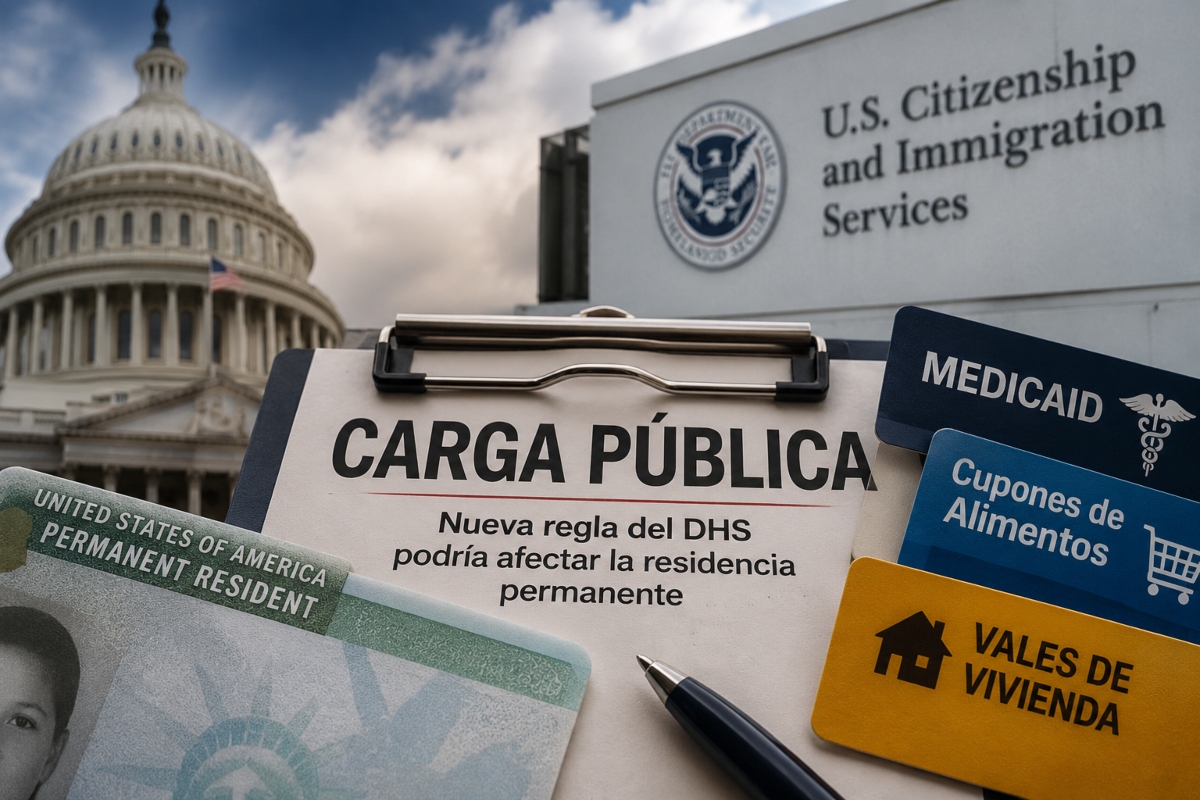
The Trump administration will reinstate a policy allowing immigration officials to evaluate an applicant’s use of public benefits when deciding applications for lawful permanent residency.
The measure reappeared after being published in the Federal Register this Thursday.
Its official publication is scheduled for July 20, according to Telemundo.
The policy, known as the public charge rule, was originally implemented in February 2020.
Trump Revives the Public Charge Rule for Green Card Applications
«Trump revives the ‘public charge’ rule that could prevent some immigrants from obtaining a Green Card.» https://t.co/b3qm11njDl
— Perfilador (@PERFILADOR) July 16, 2026
The policy was later revoked during President Joe Biden’s administration.
Now, President Donald Trump is bringing it back.
The decision comes as the White House continues to tighten policies on both legal and illegal immigration.
It also arrives at a time when food and healthcare costs remain elevated.
How the Public Charge Rule Changes Green Card Evaluations
‘Public charge’: U.S. government revives rule that could deny Green Cards to immigrants who use public assistance. More here.
https://t.co/RQlkE4HfVr— Telemundo Colorado (@TelemundoCO) July 16, 2026
For decades, U.S. immigration law has allowed certain applicants to be deemed inadmissible if they are likely to become dependent on government assistance.
Under the reinstated public charge rule, the U.S. Citizenship and Immigration Services (USCIS) will once again have broader discretion when reviewing applications.
Immigration officers will evaluate each case individually.
In addition to an applicant’s use of certain public benefits, officials will also review several personal factors.
YOU MAY ALSO BE INTERESTED IN: Confirmed! USCIS to Reinstate Public Charge Rule, Potentially Affecting Thousands of Immigrants
These factors include:
- Age
- Health status
- Family situation
- Financial resources
- Education
- Job skills
According to the administration, these elements help determine whether an applicant is likely to be financially self-sufficient.
USCIS Director Joseph B. Edlow defended the policy, stating:
«Under President Trump, USCIS is restoring the fundamental principle that immigrants should be able to support themselves.»
According to the administration, the goal is to reinforce the principle of self-sufficiency while protecting taxpayer-funded public resources.
Public Charge Rule Returns to the Center of the Immigration Debate
The policy could affect applicants who receive certain public benefits.
These include: SNAP food assistance (food stamps), Medicaid, housing vouchers, and other public assistance programs.
The return of the public charge rule revives one of the most controversial immigration policies from Trump’s first term.
Its elimination under the Biden administration had restored different standards for evaluating residency applications.
Now, USCIS will once again conduct a broader review of each applicant’s financial circumstances before deciding whether to approve lawful permanent residency.
The policy also includes administrative changes.
The Form I-485, used to apply for permanent residence or adjust immigration status, will be updated.
The revised evaluations will begin once the rule officially takes effect following publication.
Thousands of Immigrants Could Reconsider Their Applications
The Department of Homeland Security (DHS) estimates that the policy could directly affect approximately 588,000 adjustment of status applicants each year.
However, immigration experts believe its greatest impact may be indirect.
The DHS also estimates that about 950,000 people living in immigrant households could choose not to apply for public benefits out of concern that doing so might hurt their chances of obtaining permanent residency.
USCIS emphasized one important clarification.
Benefits received by an applicant’s family members will not automatically be treated as benefits received by the applicant.
However, they may still be considered as part of the household’s overall financial evaluation.
Historically, denials based on the public charge rule have been relatively uncommon.
Even so, immigrant rights organizations warn that reinstating the policy could once again create uncertainty for thousands of families who legally rely on healthcare, food assistance, or housing programs while pursuing lawful immigration status.
The return of the public charge rule marks the revival of one of the most significant immigration policies introduced during Donald Trump’s first presidential term.